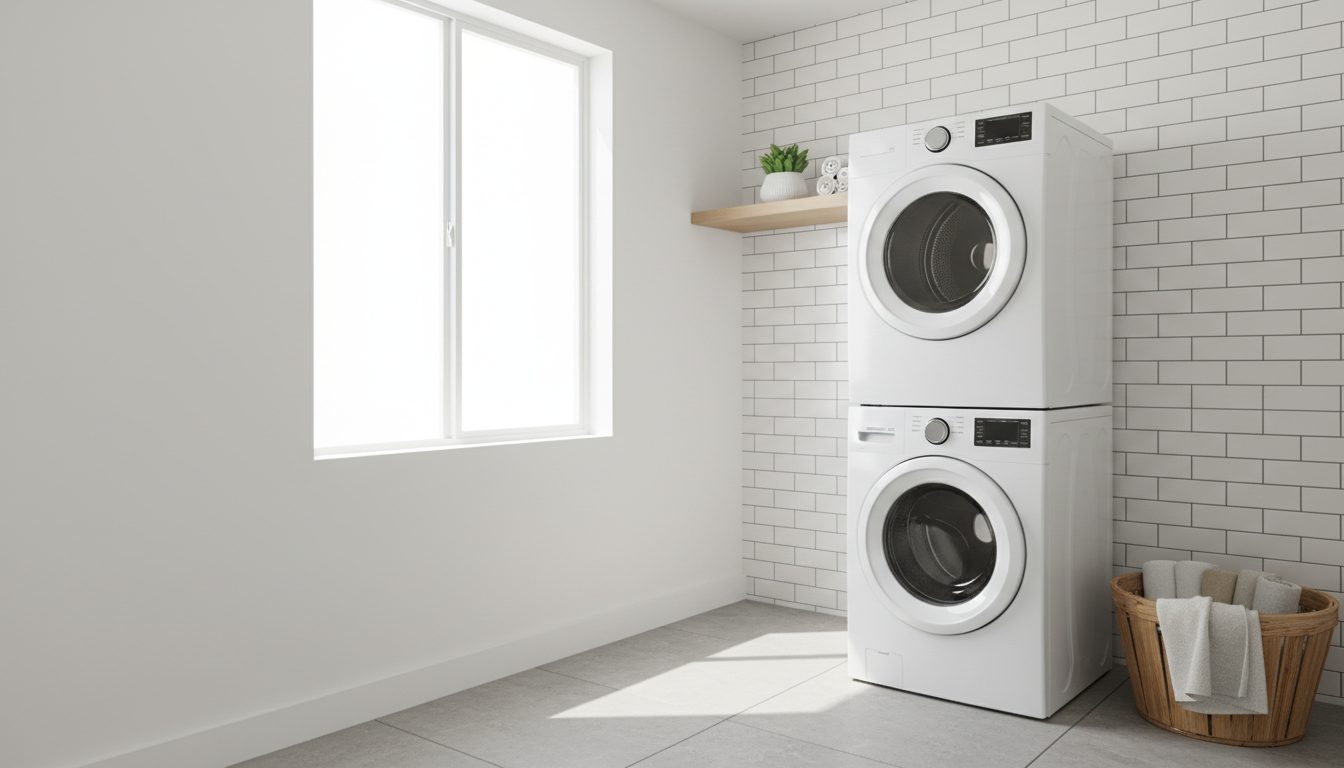
To find the most reliable units for your home, evaluate key factors such as machine capacity, configuration types, and specific features like agitators versus impellers. This washer and dryer buying guide suggests comparing front-load and top-load models to determine which layout best fits your laundry habits and physical space. Selecting a machine based on these performance metrics ensures long-term efficiency and durability for your household.
There is nothing more disruptive to a North Metro household than a sudden laundry room failure, especially when modern machines often feel built to expire rather than to last. Choosing a new set requires more than just picking a sleek exterior; it demands an understanding of the mechanical guts that keep your home running smoothly. In this guide, we provide a technician’s perspective on the industry, covering everything from the performance differences between agitators and impellers to the long-term costs of gas versus electric dryers. You will learn how to navigate the front load versus top load debate, identify which brands truly withstand the test of time, and determine when a high-quality reconditioned unit is a smarter investment than a brand-new model. We will also outline the essential measurements and requirements every homeowner needs to verify before making a final commitment.
Navigating the Laundry Appliance Landscape in the North Metro
Homeowners in Stacy, Forest Lake, and North Branch face a unique set of laundry challenges, from managing heavy workloads for active families to navigating the specific plumbing requirements of local homes. A new washer and dryer set represents a significant financial investment, often intended to last a decade or more. Most shoppers instinctively visit big box retailers, where machines sit in crates, untested and sight unseen. This guide changes that perspective by highlighting the value of technician-verified equipment.
At our discounted inventory showroom in Stacy, we prioritize mechanical reliability over flashy digital features. Every reconditioned or open-box unit undergoes a rigorous inspection by the same experts who provide our professional appliance repair services. Unlike generic retail outlets, we verify that these machines perform under load before they ever reach your laundry room. Throughout this washer and dryer buying guide, we will leverage our field experience in the Twin Cities North Metro area to help you navigate the technical landscape. We will cover critical decisions including gas versus electric fuel sources, the mechanical differences between agitators and impellers, and specific brand insights from our repair team. Choosing the right machine is about more than aesthetics; it is about finding a unit that can be serviced and sustained for years to come.
Front Load vs Top Load Washers: Which Layout Suits Your Lifestyle?
The choice between a front load and top load configuration dictates how you will interact with your laundry for the next decade. Front load washers are the preferred choice for many homeowners in newer Twin Cities North Metro area developments where space is at a premium. These units are stackable, which frees up floor space for folding tables or storage. Mechanically, front loaders are highly efficient. They use less water and boast significantly higher spin speeds than most top loaders. This high velocity extraction means clothes come out less saturated, which reduces the workload and energy consumption of your dryer.
Top load washers remain a staple for many residents in Chisago County who value a more traditional approach to laundry. The primary advantage here is ergonomic; you do not have to bend over to load or unload the machine. Furthermore, because gravity allows moisture to evaporate more easily from the tub, top loaders are inherently less prone to the mold and mildew odors that can sometimes plague front load gaskets if they are not dried after use.
Feature | Front Load Washer | Top Load Washer |
|---|---|---|
Space Efficiency | High (Stackable) | Standard (Side-by-Side) |
Water Usage | Very Low | Moderate to High |
Drying Time | Shorter (High Spin) | Longer (Lower Spin) |
Ergonomics | Requires Bending | Easy Access |
Maintenance | Gasket Care Required | Low Odor Risk |
When browsing our discounted inventory showroom in Stacy, consider your physical comfort and the layout of your laundry room. While front loaders offer modern efficiency, the simplicity and reliability of a top loader often appeal to those prioritizing ease of use. This choice is a foundational step in any practical washer and dryer buying guide, as it dictates the physical footprint and long term maintenance requirements of your utility space.
The Mechanical Debate: Agitators vs Impellers
The choice of wash mechanism is the next critical step in your washer and dryer buying guide. Within the top load category, you must decide between a traditional agitator and a high efficiency impeller. These two systems move water and fabric in fundamentally different ways, impacting both cleaning performance and the longevity of your wardrobe.
Agitators utilize a central post that twists to move clothing through the water. This provides a vigorous scrubbing action that is unmatched for removing heavy mud or grease, making it a favorite for those with demanding outdoor jobs. The trade-off is physical wear; the aggressive motion can be tough on delicate fabrics over hundreds of cycles. Impellers use a low profile disc at the bottom of the drum. This design relies on the clothes rubbing against one another in a shallow pool of water. Because there is no central pillar, impellers provide the tub capacity needed for bulky winter coats and the heavy bedding essential for MN winters.
From a professional appliance repair services perspective, these systems present different maintenance profiles. Agitator models are mechanically straightforward, though components like drive couplings or plastic agitator directional clips may eventually wear out. Impellers often utilize more sophisticated electronic sensors and VFD (Variable Frequency Drive) motors to manage load balance. For homeowners browsing our discounted inventory showroom in Stacy, we generally find that traditional agitator units offer a more predictable mechanical lifespan for heavy duty use in the Twin Cities North Metro area.
Gas vs Electric Dryers: Performance and Installation Costs
Once you have selected a wash mechanism, the next step in this washer and dryer buying guide is determining your fuel source. Most modern homes in the Twin Cities North Metro area come equipped with a heavy duty 240v outlet. Electric dryers are the most common choice because they are straightforward to install; you simply secure the cord and connect the vent.
Gas dryers utilize a dedicated burner to generate heat, which typically allows them to reach target temperatures faster and dry heavy loads more efficiently than their electric counterparts. While these units often carry a slightly higher price tag at the point of sale, the lower cost of natural gas compared to electricity means these machines generally offer lower operating costs over the long term. Homeowners in older residences throughout Wyoming or Lindström should inspect their basement laundry rooms for an existing gas line before shopping.
Feature | Electric Dryer | Gas Dryer |
|---|---|---|
Power Source | 240v Electric Outlet | Natural Gas Line & 120v Outlet |
Installation Ease | High (Plug and Play) | Moderate (Requires Gas Hookup) |
Drying Speed | Standard | Faster |
Operating Cost | Higher Monthly Utility | Lower Monthly Utility |
We recommend verifying your existing hookups before visiting our discounted inventory showroom in Stacy. Switching from gas to electric is usually simple, but installing a new gas line requires a licensed professional or professional appliance repair services to ensure the connection is safe and code-compliant.
Choosing the Right Capacity for Your Household
Selecting the correct drum volume is just as critical as the fuel source. Capacity dictates how many cycles you run per week and how effectively the machine handles heavy items. For couples or small households, a washer between 3.5 and 4.0 cubic feet is generally sufficient for standard loads. However, for families in the Twin Cities North Metro area with children in sports or those managing heavy outdoor gear, we recommend looking for units in the 4.5 to 5.0+ cubic foot range. These larger drums prevent overloading, which is a common mechanical stress point that leads to frequent calls for professional appliance repair services.
Household Profile | Washer Capacity | Recommended Dryer Capacity |
|---|---|---|
Couples / Low Volume | 3.5 – 4.0 cu. ft. | 7.0 – 8.0 cu. ft. |
Families / Active Lifestyles | 4.5 – 5.0+ cu. ft. | 9.0 – 10.0+ cu. ft. |
Matching the dryer capacity is crucial for performance. The dryer should typically have double the capacity of the washer to allow for proper airflow. Without this extra volume, wet clothes cannot tumble freely, resulting in damp spots and increased energy costs. When browsing our discounted inventory showroom in Stacy, prioritize a pairing that maintains this ratio to ensure your laundry dries efficiently in a single cycle.
The Technician Perspective: Most Reliable Brands and What to Avoid

A critical part of any washer and dryer buying guide involves looking past the chrome trim to the internal components. Our team at Reliable Appliance performs professional appliance repair services daily across the Twin Cities North Metro area, giving us a unique view of which machines actually last. We consistently recommend Whirlpool and Maytag for their mechanical simplicity. These brands utilize a design language that has remained relatively stable, meaning parts are readily available in the Stacy area and repairs are generally straightforward. LG has also earned a spot on our recommended list, particularly for their front-load motor systems which tend to outlast many competitors.
Reliability is not just about how often a machine breaks; it is about how easily it can be fixed. We often advise customers to be cautious with brands that prioritize complex software over mechanical integrity. Some modern manufacturers use sealed tubs that cannot be opened to replace a bearing, effectively turning a common repair into a total machine replacement. Others suffer from proprietary control boards that are frequently backordered or prohibitively expensive. If a technician cannot access the components without breaking the outer housing, the machine is essentially disposable.
Brand Category | Why Technicians Prefer It | Parts Availability |
|---|---|---|
Whirlpool / Maytag | Standardized mechanical designs | Excellent / Local Stock |
LG | Durable Direct Drive motors | Good / Regional |
High-Tech "Smart" Brands | Avoid: Proprietary software locks | Poor / Long Lead Times |
When you visit our discounted inventory showroom, you will notice we curate our stock based on these technical realities. Choosing a machine with a proven track record for serviceability ensures that when a wear-and-tear item eventually fails, your laundry room is only down for a day, not a month.
The Insider Guide to Buying Used and Reconditioned Appliances

Selecting a reliable brand is the first step, but the next logical question in a washer and dryer buying guide is whether to buy new or explore the secondary market. Buying "used" from a private seller on a social media marketplace is often a gamble. You are essentially paying for a machine that lacks a service history and could fail within a week. In contrast, reconditioned units at our discounted inventory showroom in Stacy have been systematically vetted by technicians who perform professional appliance repair services daily.
Our reconditioning process is rigorous. We verify the spin cycle balance to ensure the suspension rods are not fatigued, which is a common issue that causes machines to shake or move across the laundry room floor. Technicians test the heating element for consistent thermal output and inspect the lid safety switch to prevent mid-cycle interruptions. Most importantly, we look for internal tub rust or bearing wear that might be invisible to the untrained eye but indicates a machine is nearing the end of its life.
Inspection Point | What We Verify | Why It Matters for You |
|---|---|---|
Spin Cycle Balance | Suspension and tub alignment | Prevents excessive noise and floor damage |
Heating Element | Ohms resistance and thermal output | Ensures clothes dry in a single cycle |
Safety Switches | Lid and door lock functionality | Prevents electrical shorts and operational failure |
Tub Integrity | Internal rust and bearing noise | Dictates the remaining lifespan of the machine |
For homeowners in the Twin Cities North Metro area, reconditioned appliances represent the best intersection of value and reliability. This path allows you to acquire a machine that has been stress-tested and cleared for years of future use, often for a fraction of the cost of a brand new unit.
Understanding the 50/50 Rule for Appliance Replacement

Deciding between a repair and a replacement often comes down to the 50/50 rule. This practical guideline suggests that if a repair estimate for your current machine reaches 50% of the cost of a replacement, the investment in a fix is likely not worth it. This logic is a cornerstone of any sensible washer and dryer buying guide. If your machine is more than halfway through its expected lifespan, typically eight to twelve years, a major repair often signals that other components will soon follow.
When our professional appliance repair services team evaluates a machine in the Twin Cities North Metro area, we compare the quote against the value of a technician-verified unit. For instance, if a control board replacement or a motor repair costs $400, but you can purchase a newer scratch-and-dent or open-box model from our discounted inventory showroom for slightly more, replacing the unit is the smarter financial move. This approach ensures you are not sinking money into a machine with limited remaining utility while providing a cost-effective path to a more reliable appliance.
Pre Purchase Checklist: Measuring and Requirements
Before finalizing a selection from our discounted inventory showroom, you must verify that the machine can actually reach its destination. Many installations in the Twin Cities North Metro area are stalled not by the laundry room dimensions, but by a narrow basement staircase or a tight hallway corner. Measure every doorway and turn along the path of entry; leave at least one inch of clearance on all sides for the delivery team to maneuver.
Requirement | Detail | Why It Matters |
|---|---|---|
Venting | 4-inch rigid metal ducting | Prevents lint build-up and fire hazards |
Water Valves | Functional shut-offs | Necessary for emergency stops and leak prevention |
Clearance | 6 inches behind unit | Accommodates hoses and prevents vent crushing |
Electrical | 240v (Electric) or 120v (Gas) | Must match the machine's specific power draw |
Check that your water shut-off valves are accessible and turn freely. If they are corroded or seized, contact our professional appliance repair services team to address the plumbing before your new set arrives. This final step in your washer and dryer buying guide ensures that once the unit is in place, it is ready for immediate, safe operation.