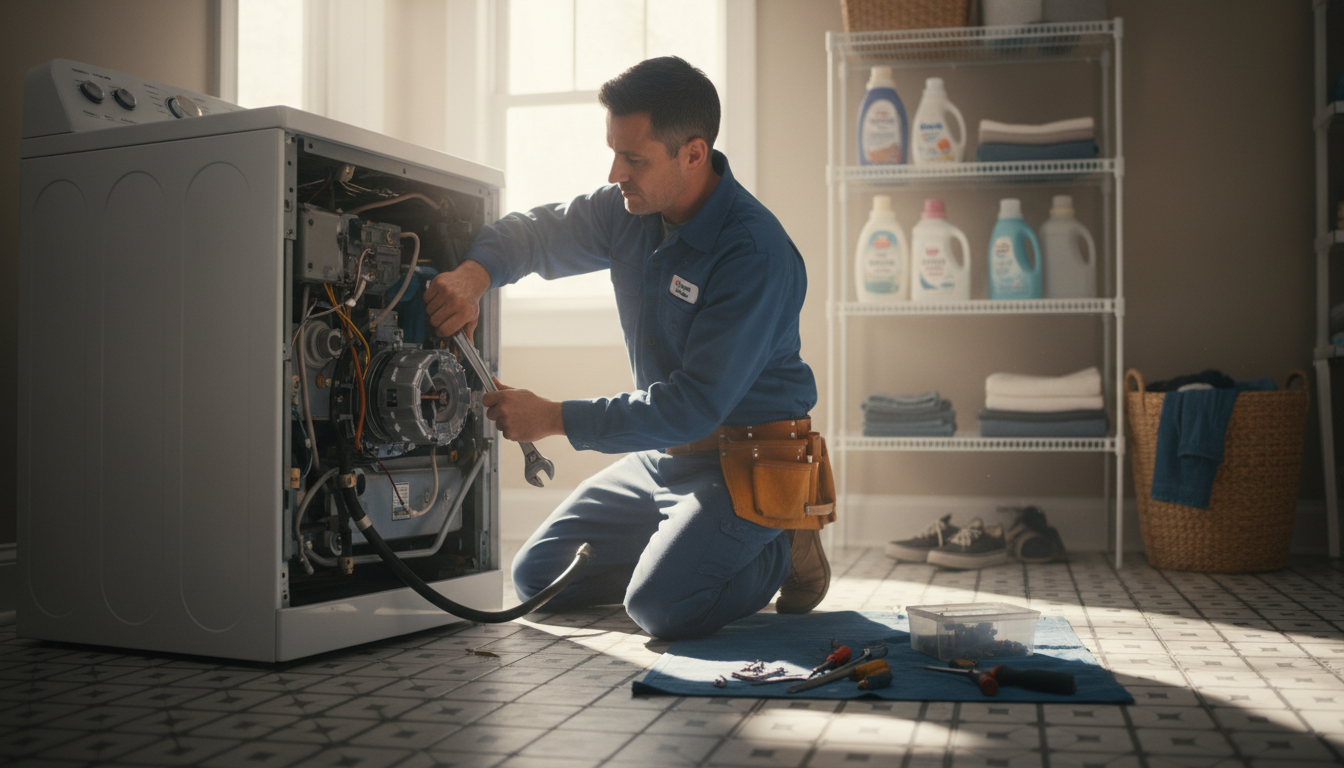
A washing machine not draining is typically caused by a clogged drain hose, a blocked pump filter, or a malfunctioning drain pump. Homeowners should check for kinks in the hose and remove any debris trapped in the filter; however, a faulty lid switch or damaged drive belt may also be the culprit.
Few scenarios are more frustrating than opening your washing machine only to find your clothes submerged in a pool of stagnant, soapy water. Beyond the immediate mess, a washer that fails to drain disrupts your entire household routine and, if ignored, can lead to secondary issues like mildew or costly floor damage. At Reliable Appliance, we understand that North Metro homeowners need practical solutions that go beyond generic advice. This guide provides a technician's perspective on the most common culprits, ranging from simple hose obstructions to mechanical pump failures. You will learn how to safely drain your unit, inspect critical components like the coin trap, and determine when a repair makes more financial sense than a full replacement. We also address how local water quality impacts your appliance's longevity, ensuring you have the expert knowledge required to get your laundry room back in order.
Why Your Washer Stopped Mid Cycle in the North Metro
Homeowners across the Twin Cities North Metro area, from North Oaks to North Branch, frequently encounter the frustration of a laundry room disaster. A washer that quits mid-cycle can throw an entire household off schedule, especially when you are left with a heavy, waterlogged mess. A washing machine not draining or spinning is one of the most common service calls we receive at Reliable Appliance, and these issues often happen at the most inconvenient times.
Generally, these problems manifest in two ways. You might find a tub full of standing, soapy water, which indicates a clear drainage failure where the pump cannot evacuate the liquid. Alternatively, your clothes might come out dripping wet even if the water appears to be gone, which usually points to a spinning issue where the drum fails to reach high speeds.
While some of these fixes are straightforward enough for a DIY approach, others involve complex components like drive motors or electronic control boards. Understanding the difference is vital for your safety. Attempting to dismantle a unit without the right knowledge can lead to significant flooding or electrical hazards. Our team specializes in both professional appliance repair services and providing high quality discounted inventory if a repair is no longer the most cost-effective option for your home.
Safety First: How to Manually Drain a Full Washer
Before you can diagnose why your washing machine is not draining, you must remove the standing water to prevent a flood in your laundry room. Safety is the absolute priority; water and electricity are a dangerous combination. Always unplug the unit from the wall outlet before you begin. If the plug is inaccessible due to the water, shut off the power at your home’s circuit breaker.
To force a front-load washing machine to drain, look for a small access panel on the bottom front of the unit. Inside, you will typically find a small, flexible emergency drain hose with a plug. Place a shallow pan or a tray on the floor, pull the hose out, and remove the plug. You will likely need to empty the pan several times, so keep a larger bucket nearby to dump the water into as you go.
Top-load machines are often more difficult because gravity holds the water at the bottom of the drum. The most efficient method for a top-loader is using a wet/dry shop vac. Place the vacuum hose directly into the drum to suck out the bulk of the water. If you do not have a shop vac, you can lower the external drain hose to floor level and let it drain into a shallow bucket via gravity, though this requires pulling the machine away from the wall. If these manual methods seem overwhelming or if the water is not receding at all, our team at Reliable Appliance provides professional appliance repair services throughout the Twin Cities North Metro area to handle the heavy lifting for you.
Checking the Drain Hose for Kinks and Clogs
Once the standing water is managed, the first mechanical component to inspect is the external drain hose. This is frequently the source of the most straightforward, cost-effective fixes. Carefully pull the unit away from the wall to examine the corrugated plastic hose. These hoses are prone to kinking if the machine is pushed too far back, which physically blocks the exit path for the water. A sharp bend in the plastic acts like a closed valve, causing the control board to trigger a "washing machine not draining" error code.
Inspect the connection points, specifically where the hose enters the wall standpipe or clips onto the edge of a utility sink. We often find that lint, hair, or even small coins can bridge the gap at the end of the hose, creating a physical dam.
In the Twin Cities North Metro area, particularly in homes with older plumbing in Stacy or Forest Lake, we often see issues that mimic a machine failure but are actually home drainage problems. High-efficiency washers pump water at a high velocity. If your home has an older 1.5-inch drain pipe rather than the modern 2-inch standard, the pipe may not keep up. This leads to backflow or "suds lock," where the machine detects water returning and stops the cycle to prevent a flood. If you suspect a deeper plumbing issue, our professional appliance repair services can help determine if the problem lies within the unit or your home's drainage system.
Cleaning the Coin Trap and Pump Filter
If the drain hose is clear, the next step is the pump filter, often called the coin trap. In our daily experience servicing the Twin Cities North Metro area, a clogged filter is the number one reason for a washing machine not draining water when no hose blockage is present. For popular front load brands such as LG and Samsung, this filter is typically located behind a small access door at the bottom front of the machine. Top load models are different; many modern units do not have a user-accessible filter, meaning a blockage deep in the pump may require professional appliance repair services to resolve.
Our technicians regularly find a predictable assortment of debris inside these traps: loose change, hair ties, screws from pockets, and occasionally small baby socks. These items jam the impeller or create a physical wall that prevents water from exiting. Before unscrewing the filter, be prepared for a "water rush." Even after manual draining, the housing holds a significant amount of standing water. Place a shallow pan or several thick towels directly under the cap to catch the spill. If you discover the filter housing is cracked or the debris has caused a permanent pump failure, you might consider browsing our discounted inventory in Stacy for a high quality replacement rather than investing in a complex repair.
When the Problem is the Drain Pump
If you have cleared the filter and inspected the hose but still find your washing machine not draining, the drain pump itself has likely failed mechanically. In modern high efficiency units from brands like Whirlpool and GE, the pump is a frequent point of failure due to the high volume of water they manage. These components are hard workers, but they are not indestructible.
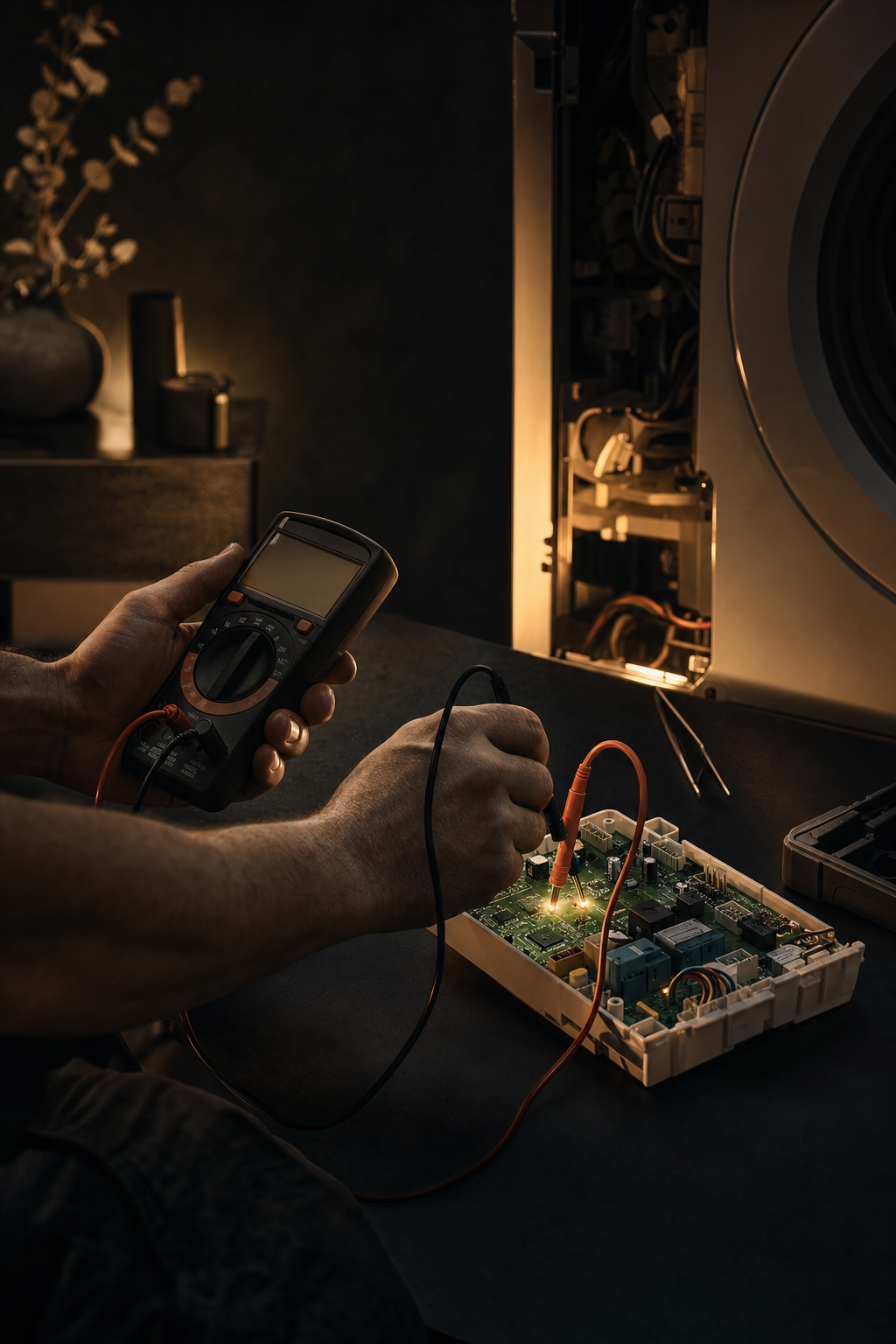
Listen closely to the machine during the drain portion of the cycle. A distinct humming sound suggests the pump motor is receiving electrical power but the impeller is jammed by a stray object or has seized entirely. Conversely, a loud grinding or rattling noise often indicates that the internal plastic fins have snapped or the motor bearings have failed. Our technicians in the Twin Cities North Metro area often use multimeters to confirm if the pump is receiving the required voltage; if the unit has power but refuses to turn, the part requires replacement. While our professional appliance repair services can swap these pumps quickly, a failure in an older machine might be the right time to browse our discounted inventory in Stacy for a more reliable, late model replacement.
Why Your Washer Won't Spin: Lid Switches and Drive Belts
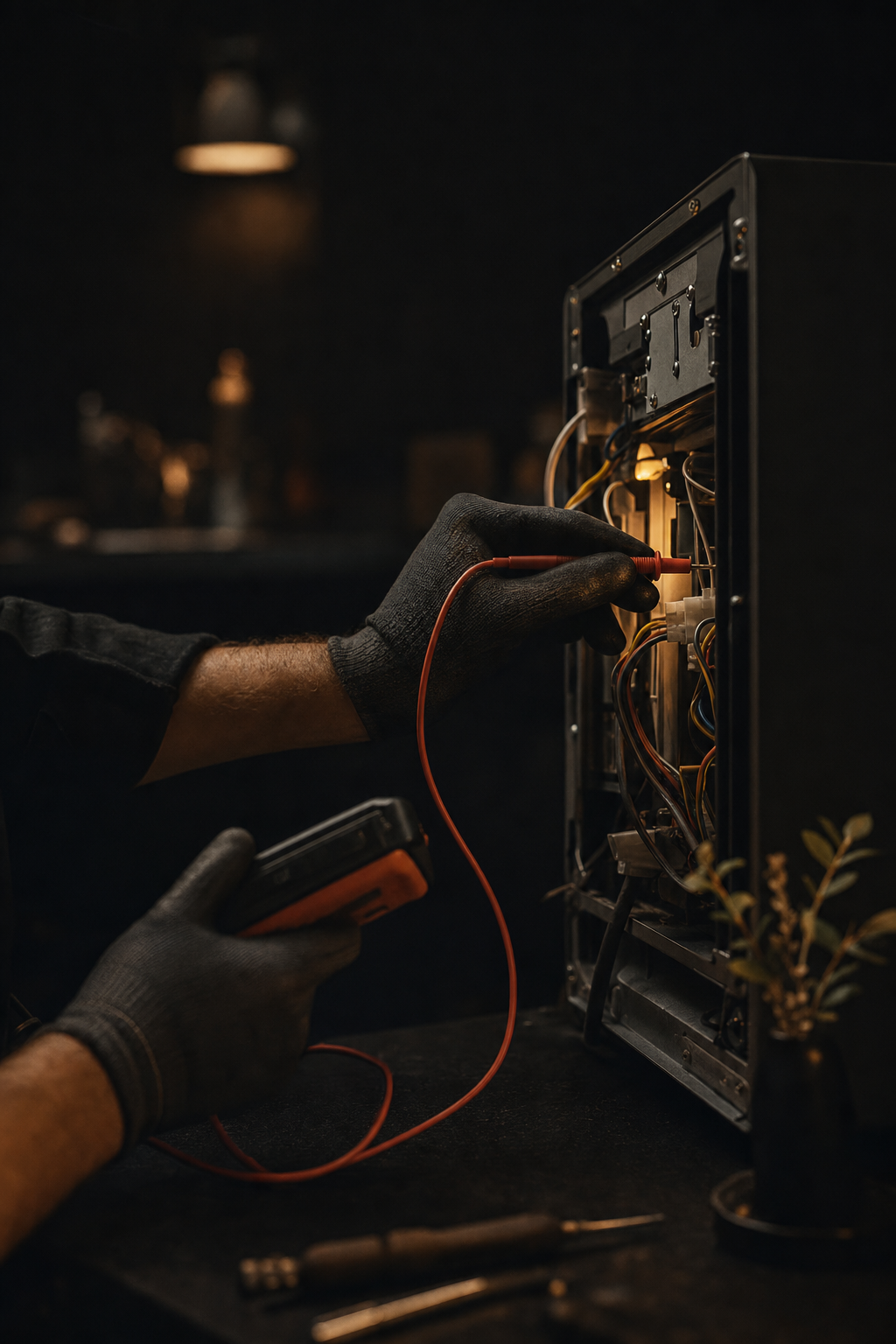
While standing water is usually a pump issue, a drum that refuses to rotate often points toward a safety sensor or a mechanical disconnection. Most modern washing machines utilize a lid switch for top loaders or a door latch assembly for front loaders to ensure the unit is sealed before high speed spinning begins. If these switches fail, the machine will not complete the cycle, even if the washing machine not draining issue was previously resolved. You might notice the machine fills and agitates but sits idle when it is time to spin. Testing these switches often requires a multimeter to check for continuity, a task our team routinely performs during professional appliance repair services.
Another frequent culprit is a physical break between the motor and the drum. If you hear the motor whirring or revving but the drum remains stationary, the drive belt has likely snapped or slipped off the pulley. In older Whirlpool or Kenmore direct drive models, a failed motor coupler is a common point of failure. This small plastic and rubber component acts like a safety fuse; if the load is too heavy, the coupler breaks to prevent the motor from burning out.
These mechanical repairs involve disassembling the cabinet, which can be labor intensive depending on the model. If your machine is showing its age and requires a major teardown, it might be more practical to explore our discounted inventory in Stacy. Homeowners throughout the Twin Cities North Metro area often find that replacing an older, failing unit with a high quality reconditioned model is a faster, more reliable way to get their laundry room back in order.
The Minnesota Hard Water Factor: Scale and Drainage
Beyond mechanical wear and tear, homeowners in the Twin Cities North Metro area must account for the high mineral content characteristic of local water supplies. In communities across Chisago County and Stacy, hard water contributes significantly to a washing machine not draining efficiently over time. Calcium carbonate and magnesium deposits gradually accumulate inside the pump housing, the drain lines, and the pressure sensor tubes.
These mineral deposits eventually harden into a brittle crust. When pieces of this scale break loose, they form what technicians call 'slugs.' These solid chunks can travel through the system and physically jam the pump impeller, causing the motor to hum or overheat. To prevent this, we suggest a monthly maintenance wash using a specialized descaling agent or a vinegar solution to dissolve buildup. If your machine is already struggling with a seized pump due to scale, our professional appliance repair services can restore proper flow. For units where the buildup has caused secondary damage to the drum or outer tub, exploring our discounted inventory in Stacy is often the most practical long term solution.
Cost Analysis: Repairing vs. Replacing Your Washer
Deciding whether to invest in a fix or start fresh depends largely on the age of the unit and the specific part that failed. In the Twin Cities North Metro area, homeowners should generally expect to pay between $175 and $450 for professional appliance repair services. A simple fix, such as replacing a lid switch or a basic drain pump, typically falls on the lower end of that spectrum. However, if the technician finds a failed control board or a damaged motor, costs can quickly climb toward the higher end once labor and parts are finalized.
The threshold for replacement usually arrives around the 8 to 10 year mark. For an older unit, a major mechanical failure like a cracked transmission or a seized drum bearing often results in a repair estimate exceeding $500. In these cases, spending half the cost of a new machine on a decade old appliance is rarely a sound investment.
Instead of sinking significant capital into an aging unit, many local residents opt to browse the discounted inventory at our Stacy showroom. We provide a range of open box and reconditioned machines that bridge the gap between a costly repair and the high MSRP of a new retail model. Often, you can secure a late model, high efficiency unit for just a few hundred dollars more than a major repair, ensuring your household avoids another washing machine not draining issue for years to come.