Proper dishwasher maintenance requires regularly cleaning the filter and running a hot cycle with white vinegar or citric acid to dissolve hard water buildup. Homeowners can prevent white residue and improve cleaning performance by performing these simple tasks monthly; this ensures the appliance stays in peak condition despite local mineral levels.
Nothing is more frustrating than pulling a clean glass from the dishwasher only to find it covered in a cloudy, white film. For homeowners in the North Metro, this persistent issue is often caused by our region's exceptionally hard water. Over time, calcium and magnesium deposits do more than just spot your glassware; they clog vital components and force your appliance to work harder than necessary. To protect your investment and ensure sparkling results, you must take a proactive approach to care. In this guide, we will walk you through the essential steps for cleaning your filter, removing stubborn calcium buildup, and clearing the spray arms. You will also find a practical maintenance checklist designed specifically for local homes and clear indicators for when it is time to call in a professional technician for a repair.
Why Minnesota Hard Water is Your Dishwasher's Biggest Enemy
Living in the Twin Cities North Metro area, homeowners often contend with water that is significantly harder than the national average. In communities like Forest Lake, Wyoming, and North Branch, many properties rely on private wells or municipal systems with high concentrations of dissolved minerals. While you might first notice the aesthetic issues, like cloudy glassware or white spots, the real damage from hard water happens where you can't see it.
Generic manufacturer guides often suggest cleaning your dishwasher once a year, but for a home in our region, that schedule is rarely sufficient. The calcium and magnesium in our local water create a stubborn, "crusty" white residue that acts like a slow-moving cement. This scale coats the heating element, creating an insulating layer that forces the machine to run longer and hotter to reach the correct temperature. Over time, this extra strain leads to higher energy bills and eventual component burnout.
Beyond the heating element, hard water directly impacts mechanical performance. Mineral "pebbles" can break off from the tub walls and lodge in the tiny orifices of the spray arms, blocking water flow and leaving dishes dirty. In severe cases, buildup can even seize the drain pump or clog the internal hoses, resulting in standing water and drainage errors. Effective dishwasher maintenance in Minnesota requires a proactive approach to neutralizing these minerals before they can calcify inside your machine's critical systems.
If your unit has reached the point of mechanical failure due to extreme buildup, we provide professional appliance repair services to help restore your machine to peak performance. However, if the scale has compromised the tub or major components beyond reasonable repair, we also carry a discounted dishwasher inventory at our showroom in Stacy. This offers an affordable path to a more efficient, newer model when the cost of repairing an older, scale-damaged machine no longer makes sense.
Cleaning the Dishwasher Filter: A Step by Step Guide

To effectively combat the mineral accumulation mentioned earlier, you must start with the filter. Most modern machines from brands like Bosch or Whirlpool utilize a manual-clean filter located at the very bottom of the tub. To access it, remove the bottom rack and look for a circular plastic assembly. Most designs require a simple quarter-turn counter-clockwise to unlock the unit, allowing you to pull the assembly straight up and out of the machine.
Older machines often featured self-cleaning filters with a small macerator meant to grind up food particles. However, in the Twin Cities North Metro area, these systems frequently struggle. The self-cleaning mechanism is designed for soft food debris, not the rock-hard calcium deposits found in Stacy or Wyoming well water. If you own an older model and notice poor drainage or grit on your plates, the internal screen may be calcified. In these cases, you might need to manually clear those mineral obstructions to restore flow.
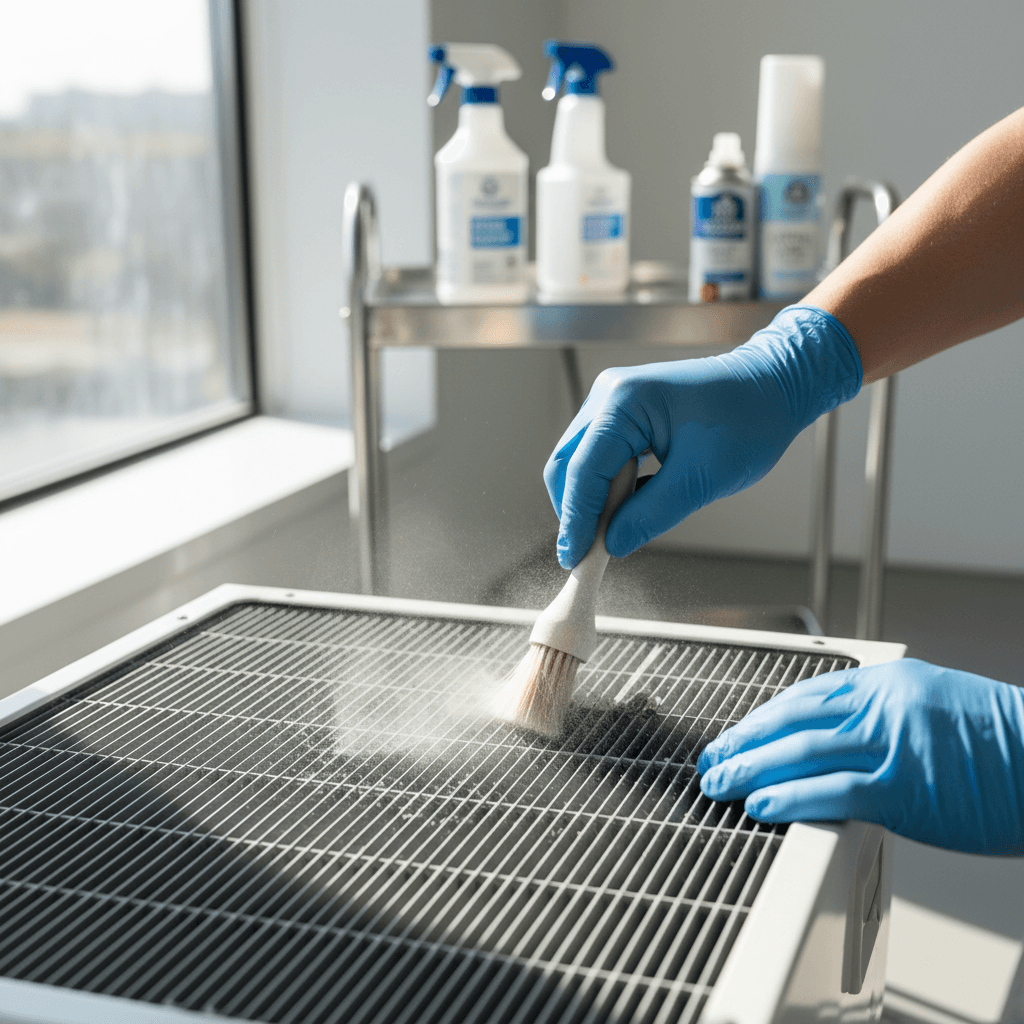
Once the filter is removed, rinse it under hot running water. If you see white, chalky residue trapped in the fine mesh, you may wonder if you can soak your dishwasher filter in vinegar to clean it. We recommend a 30 minute soak in a bowl of white vinegar for any filter showing visible calcium buildup. The acidity breaks down the mineral bond that a standard rinse cannot reach. Use a soft nylon brush to gently scrub away any remaining film before locking the assembly back into place. Regular dishwasher maintenance at this level prevents the pump from working against a restricted flow, which is a leading cause for professional appliance repair services in our region.
How to Remove Calcium Buildup from Your Dishwasher Safely

Once the filter is clean, you must address the mineral scale coating the tub and internal plumbing. For routine dishwasher maintenance, the vinegar bowl method is a safe, accessible starting point. Place a dishwasher-safe bowl containing one cup of white distilled vinegar on the top rack of an empty machine. Run a standard cycle using the hottest water setting available. As the water circulates, the diluted acid breaks down light calcium deposits. However, be cautious with frequency. While vinegar is a popular DIY solution, its high acidity can eventually degrade the rubber door gaskets and internal seals if used weekly. We recommend this method no more than once a month.
For the heavier, 'crusty' buildup common in homes around Forest Lake and North Branch, a citric acid-based cleaner like Lemi Shine is often more effective. Citric acid is a more aggressive descaler that targets the stubborn white film on the heating element and tub walls without being as harsh on the rubber components as concentrated vinegar. If you notice your dishes still have a cloudy film after a vinegar wash, switching to a specialized citric acid treatment is the next logical step.
Homeowners with high-end European models, such as Bosch or Miele, have a built-in advantage that many fail to utilize. These units often feature internal water softening systems that require specialized dishwasher salt. In the Twin Cities North Metro area, it is vital to program the machine’s water hardness setting to match your local Grains Per Gallon (GPG) level. Many residents overlook this step, leaving the internal softener inactive while minerals wreak havoc on the machine. If you find your current unit is beyond the point of descaling, our showroom in Stacy offers a discounted dishwasher inventory with many models featuring these advanced water-softening technologies. Proper calibration of these settings is the most effective way to prevent the need for professional appliance repair services caused by mineral scale.
Clearing the Spray Arms and Door Seals
While chemical descaling addresses the interior tub, mineral pebbles often remain trapped inside the spray arms. These small, hardened chunks of calcium break loose during a cycle and migrate to the spray nozzles, partially or completely blocking water flow. To restore proper pressure, inspect the tiny holes along both the upper and lower arms. If you notice a blockage, use a toothpick or a small piece of thin wire to gently poke the debris back into the arm or pull it out. For stubborn clogs, most spray arms can be popped off or unscrewed, allowing you to shake out the loose sediment under a faucet.
The door seal, or gasket, is another critical area for dishwasher maintenance that homeowners in the Twin Cities North Metro area often overlook. Hard water minerals combined with detergent residue create a gritty film on the black rubber. This buildup prevents a watertight seal, eventually leading to floor damage or persistent musty odors. Wipe the entire perimeter of the seal using a damp cloth and mild dish soap. Avoid harsh chemicals that can dry out the rubber. Maintaining this seal is one of the simplest ways to prevent the leaks that frequently lead to professional appliance repair services. If the rubber appears cracked or brittle despite cleaning, it may be time to browse our discounted dishwasher inventory for a replacement unit.
Dishwasher Maintenance Checklist for North Metro Homes
Maintaining a dishwasher in the Twin Cities North Metro area requires a more rigorous schedule than what is found in standard owner manuals. High mineral concentrations in local water mean that generic maintenance recommendations are often insufficient to prevent scale damage. To keep your appliance running efficiently and to avoid premature professional appliance repair services, follow this localized maintenance schedule.
Monthly: The Foundation - Filter Clean: Remove the filter assembly and rinse under hot water to remove grit and organic matter. Homes in Forest Lake or Wyoming with heavy sediment may need this every two weeks. - Seal Wipe: Use a damp cloth to clean the door gasket, removing the white mineral residue that can compromise the watertight seal. - Salt Check: If your unit features an internal water softener, verify that the reservoir is filled with dishwasher salt.
Quarterly: The Deep Clean - Descaling Cycle: Run a cycle with a citric acid cleaner or the vinegar bowl method to strip scale from the heating element and tub walls. - Visual Inspection: Look for any new white spotting on the tub interior, which indicates you may need to increase your descaling frequency.
Bi-Annually: The Technical Check - Spray Arm Detailing: Remove the spray arms to shake out trapped mineral pebbles and clear blocked nozzles with a toothpick or wire. - Drain Hose Assessment: Check the drain hose under the sink for kinks or sludge buildup that could lead to backups.
If regular upkeep reveals persistent drainage issues or mechanical grinding, your unit may have sustained internal damage from long term scale exposure. In these cases, it is often more cost effective to browse our discounted dishwasher inventory in Stacy than to invest in extensive repairs on an older, failing machine.
When Maintenance Isn't Enough: Signs You Need a Professional

Consistent dishwasher maintenance can extend the life of your appliance, but local mineral conditions eventually take a toll on mechanical parts. If you notice an inch of standing water at the bottom of the tub after a cycle, the drain pump may have failed or become obstructed by calcified debris. Strange grinding or humming noises often indicate that the motor bearings are struggling against internal scale. Furthermore, if your unit frequently displays "E-code" errors, the internal sensors may be compromised by heat or mineral deposits.
In the Twin Cities North Metro area, the lifespan of a dishwasher is often shortened by high mineral content. If your machine is between 8 and 10 years old, the cost of professional appliance repair services may exceed the actual value of the unit. Labor and specialized parts for an aging, scale-damaged machine can add up quickly. When a major component like the control board or circulation motor fails, it is often more practical to explore a discounted dishwasher inventory in Stacy. Newer models offer improved filtration and better resistance to hard water, providing a more reliable long term solution than patching up a heavily calcified older unit.